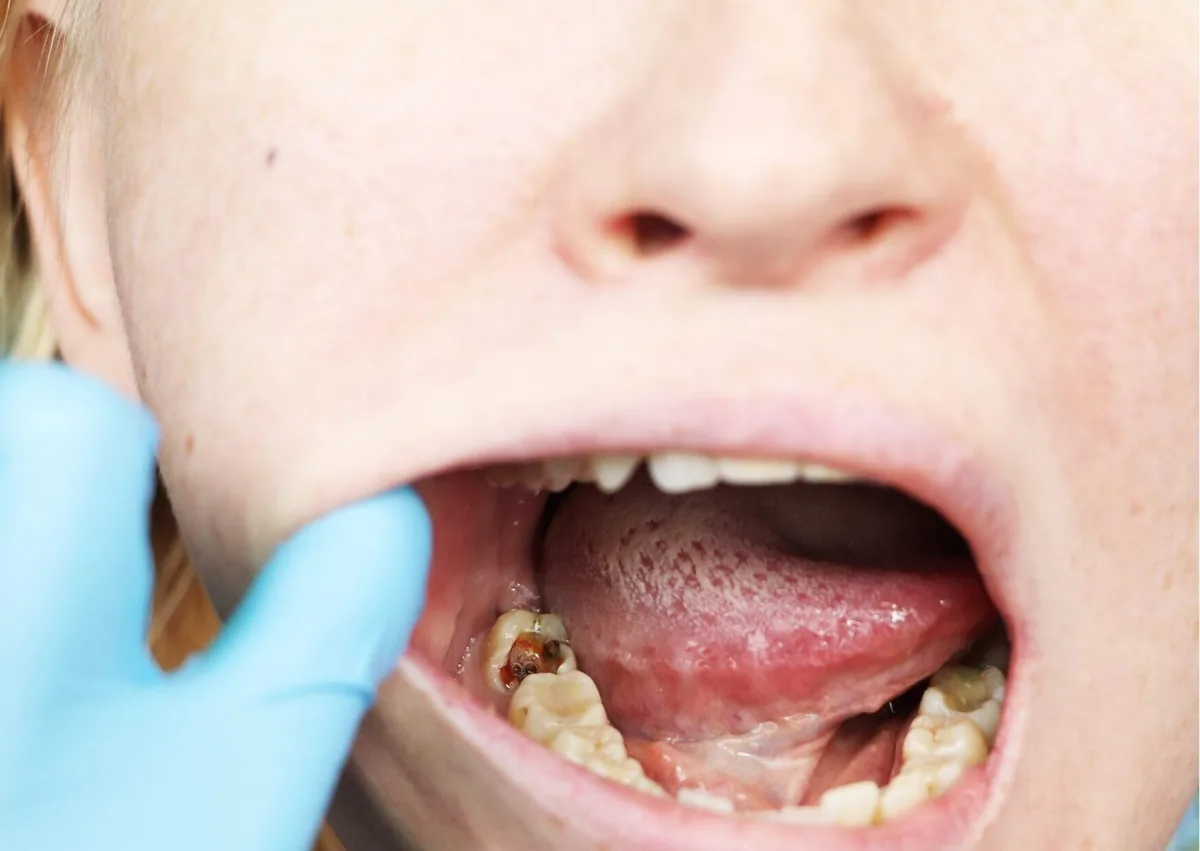
Cavities can look like white, brown, or black spots, rough areas, small pits, or visible holes in a tooth. But early decay is often hard to see at home, so a tooth can look normal and still have a cavity that needs a dental exam and X-rays.
If you’ve noticed a new spot, sensitivity, or a change in a tooth, a dental exam can help determine whether it is early decay, staining, or another issue. Elmtree Family Dental in Columbia, SC uses careful exams and X-rays to identify what is happening and guide the most appropriate next step.
A cavity often starts as a chalky white area where enamel has lost minerals. These early spots may show up near the gumline, between teeth, or around braces where plaque tends to collect.
As decay gets deeper, the area may turn yellow, light brown, dark brown, or black. The surface may also look rough, develop a small pit, or break down into a visible hole.
Some cavities are not visible in a mirror at all. Cavities between teeth are often found with bitewing X-rays, which are especially useful for detecting decay that cannot be seen directly.
On the chewing surfaces of back teeth, a cavity may appear as a dark spot in a groove or a tiny opening. Still, not every dark groove is decay because some grooves are naturally stained.
Between teeth, there may be no visible change at first. Later, you might notice a gray shadow, food catching in one area, or floss fraying against a rough edge.
Near the gumline or on an exposed root, decay may look soft, dull, yellow-brown, or black. Root decay can spread faster because root surfaces are less mineralized than enamel.
Cavities form when plaque bacteria feed on sugars and starches and produce acids. Over time, repeated acid exposure removes minerals from enamel and weakens the tooth.
Frequent snacking, sugary or acidic drinks, dry mouth, low fluoride exposure, and hard-to-clean areas all raise cavity risk. Gum recession can also expose root surfaces that are more vulnerable to decay, and learning more about how long cavities form can help explain why some changes happen gradually.
An early weak spot may sometimes be stabilized before a true hole forms. In some cases, fluoride treatment, better home care, and diet changes can help slow or stop early enamel damage.
Many small cavities cause no pain at first. As decay progresses, a tooth may become sensitive to cold, heat, sweets, or pressure when biting.
Other signs can include a toothache, bad breath, food trapping in one area, a rough edge, or a piece of tooth breaking. These symptoms do not always mean a cavity, since cracks, worn fillings, and gum problems can cause similar issues.
A dentist will examine the tooth, check the surrounding gum tissue, and may take X-rays. Treatment depends on where the cavity is, how deep it is, and whether it has reached the inner part of the tooth.
Early enamel changes may be monitored or treated conservatively in the right situation. More developed cavities often need dental fillings, including composite fillings, while severe decay may require a crown, root canal treatment, or removal if the tooth cannot be restored.
Brush twice a day with fluoride toothpaste and clean between your teeth once daily. After brushing, spit out the toothpaste instead of rinsing right away so fluoride stays on the teeth longer.
Try to reduce how often your teeth are exposed to sugary foods, sweet drinks, and frequent snacks. Drinking fluoridated water when available, managing dry mouth, and keeping regular dental visits can also lower your risk.
Do not scrape, pick at, or try to fill a suspected cavity at home. Schedule an evaluation if you notice a new spot, a hole, ongoing sensitivity, repeated food trapping, or any tooth change that is unclear or getting worse.

Seek prompt emergency dental care for facial or gum swelling, fever, pus, severe pain, or trouble opening your mouth. Go to urgent care or the emergency room for trouble breathing or swallowing, fast-spreading swelling, or swelling near the eye or neck.
If you’ve found a suspicious spot, persistent sensitivity, or sudden pain, the next step is a thorough exam with any needed X-rays so treatment can start before the problem worsens. Call Elmtree Family Dental for dental exams and cleanings in Columbia, SC and nearby West Columbia, SC or Cayce, SC at (803) 783-9900 to schedule or check same-day availability.
Yes. A cavity can look dark brown or black, especially as it gets deeper, but stains and dark grooves can look similar.
Yes. Early enamel damage may appear as a chalky white spot, especially near the gumline or around orthodontic brackets.
Yes. A cavity can form under the surface or between teeth before a visible hole appears.
No. Many early cavities do not hurt, while deeper decay is more likely to cause sensitivity or pain.
No. Brown spots may be stains, tartar, old dental material, or natural discoloration, so an exam and sometimes an X-ray are needed to tell the difference.

| Monday | 8:00 AM – 5:00 PM |
| Tuesday | 8:00 AM – 5:00 PM |
| Wednesday | 8:00 AM – 5:00 PM |
| Thursday | 8:00 AM – 5:00 PM |
| Friday | Closed |
| Saturday | Closed |
| Sunday | Closed |