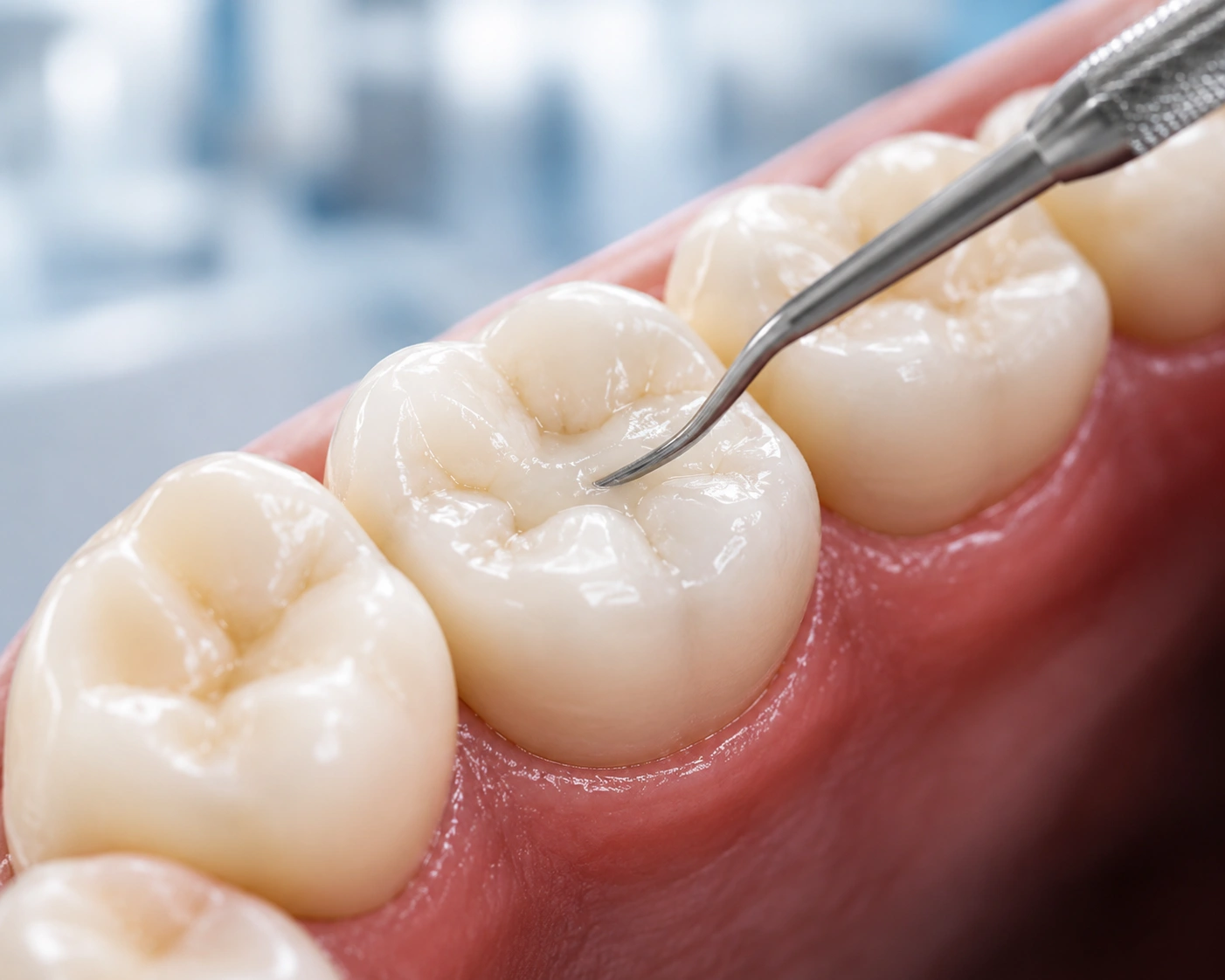
Composite fillings repair cavities, chipped teeth, and worn enamel using tooth-colored resin materials designed to restore damaged teeth with minimal enamel removal. These materials seal affected tooth surfaces and support smaller repairs without extensive drilling. Elmtree Family Dental uses composite fillings as part of a patient-focused restorative philosophy centered on long-term oral health and comfortable care.
Patients with mild decay or localized tooth damage often consider dental fillings because they can restore daily chewing performance without extensive treatment.
| Topic | Details |
| What it is | A tooth-colored resin material used to repair cavities or small tooth defects |
| Who it is for | Patients with cavities, chipped teeth, worn enamel, or minor fractures |
| Main benefits | Enamel-matched repair, limited tooth preparation, single-visit treatment |
| Limitations | Larger fillings may wear faster in high-load chewing areas |
| Timeline / durability | Usually completed in one visit; many fillings last 5–10 years depending on oral habits and maintenance |
Composite fillings are dental repair materials made from resin and fine glass particles. Dentists place the material directly into prepared teeth to restore areas damaged by decay, fractures, or enamel wear.
The resin hardens with a curing light and is shaped to match natural tooth contours and bite contact.
Composite fillings are commonly used for:
The material bonds directly to enamel and dentin surfaces, which may help reduce small gaps where bacteria could collect. Long-term durability depends on oral hygiene, cavity depth, and daily wear patterns.
Dentists also polish composite materials after placement to create smoother surfaces that may reduce plaque accumulation.
Composite materials require careful moisture control during placement because excess saliva contamination may affect bonding performance.
Composite fillings treat cavities by removing decayed tooth material and sealing the area against continued bacterial exposure. Early treatment may help prevent deeper decay from reaching the inner nerve tissue.
Tooth decay commonly progresses in this sequence:
Plaque buildup → acid production → enamel breakdown → cavity formation
If bacteria spread deeper into the tooth, inflammation or infection may affect the pulp tissue.
The filling process typically includes:
Most smaller fillings are completed during one appointment.
Composite materials are commonly used when enough healthy tooth surface remains to support the repaired area.
If decay reaches the pulp tissue, patients may eventually require root canal treatment instead of a filling.
Tooth-colored fillings are often selected because they repair visible teeth without the metallic appearance associated with amalgam fillings. The material can also support smaller repairs while limiting unnecessary enamel removal.
Patients often choose composite materials for:
For example, patients with front tooth cavities may prioritize appearance, while patients with chipped enamel may want reinforcement without altering nearby tooth surfaces.
Patients exploring broader smile improvements may also consider cosmetic dentistry when discoloration, worn enamel, or uneven tooth edges affect appearance.
Composite fillings and silver amalgam fillings differ in appearance, placement method, and long-term wear characteristics. Material selection depends on cavity size, tooth location, and chewing demands.
| Feature | Composite Fillings | Silver Amalgam Fillings |
| Appearance | Tooth-colored | Metallic silver |
| Placement method | Bonds to tooth surfaces | Mechanical retention |
| Tooth preparation | Less enamel removal | May require additional shaping |
| Visibility | Less noticeable | More visible |
| Common use | Smaller and visible areas | Heavy-load chewing surfaces |
| Cosmetic value | High | Low |
Front teeth often experience lower bite force than molars, which may influence material selection for larger repairs.
Silver amalgam fillings have historically been used in molars because they tolerate repetitive chewing stress well.
Composite materials are commonly selected for visible teeth, while larger molar cavities may require different restorative approaches depending on load distribution and cavity depth.
Composite fillings may not fully restore teeth with advanced tooth breakdown, deep fractures, or large missing sections of enamel. Larger defects sometimes require stronger restorative solutions.
Teeth with fractured cusps or extensive decay may not tolerate daily chewing forces with a filling alone.
More extensive treatment may include:
For example:
Dentists evaluate crack depth, cusp involvement, chewing load, and remaining tooth support before determining whether dental crowns are more appropriate than fillings.
Tooth-colored fillings may remain functional for many years with proper maintenance and routine monitoring. Longevity depends on cavity size, oral hygiene, grinding habits, and dietary exposure.
Smaller fillings generally experience less daily stress than larger fillings covering broader chewing surfaces.
Several factors may affect durability:
Filling edges may gradually wear over time, especially in patients with grinding habits or frequent acidic exposure.
Decay may also develop around older filling margins if bacteria accumulate near weakened edges.
Patients may help extend filling lifespan by:
Routine dental exams and cleanings may help identify small defects, leakage, or filling deterioration before larger complications develop.
Composite fillings typically feel smooth shortly after placement. Mild temporary sensitivity may occur, especially after treatment for deeper cavities.
Some patients notice:
These symptoms often improve gradually as the tooth adapts.
If bite contact feels uneven after treatment, the filling may require adjustment. Persistent pain, swelling, or lingering temperature sensitivity should be evaluated because deeper nerve irritation may be present.
Patients with dental anxiety sometimes benefit from supportive comfort approaches during restorative care. Depending on the procedure and medical history, sedation dentistry may help create a more relaxed treatment experience.
Composite fillings can sometimes replace older damaged fillings affected by leakage, fractures, or worn margins.
Replacement may be considered when patients notice:
Stable fillings without active decay or significant wear may continue functioning appropriately for years.
Treatment decisions depend on:
Small edge fractures or surface wear may develop over time, especially in patients with grinding habits or repeated chewing stress. Dentists evaluate filling conditions during routine exams.
Older amalgam fillings can sometimes be replaced when leakage, fractures, or decay develop around the filling edges. Treatment depends on cavity depth and remaining tooth support.
Composite materials may gradually discolor from coffee, tea, red wine, or tobacco exposure. Professional polishing and routine cleanings may help reduce surface staining.
Composite fillings are commonly used in pediatric and adolescent dentistry because they can repair smaller cavities while maintaining limited tooth preparation.
Cavities may cause sensitivity, dark spots, rough enamel areas, or tooth pain, although some decay develops without obvious symptoms. Dental examinations and imaging help identify early damage before it progresses.
Tooth decay develops when bacterial acids weaken enamel and create damage within the tooth structure. Early cavities may remain painless until deeper layers become affected.
If you are noticing cold sensitivity, dark tooth areas, chipped enamel, rough tooth surfaces, or discomfort while chewing, a dental evaluation may help determine whether a composite filling or another restoration is appropriate.
Treatment recommendations depend on factors such as:
Smaller cavities are often easier to repair before deeper structural damage develops.
Elmtree Family Dental can evaluate your condition, explain available treatment options, and determine whether composite fillings may help restore comfort, function, and long-term tooth health.
Patients interested in addressing early tooth damage or replacing worn fillings can request an appointment to discuss restorative treatment options.

| Monday | 8:00 AM – 5:00 PM |
| Tuesday | 8:00 AM – 5:00 PM |
| Wednesday | 8:00 AM – 5:00 PM |
| Thursday | 8:00 AM – 5:00 PM |
| Friday | Closed |
| Saturday | Closed |
| Sunday | Closed |