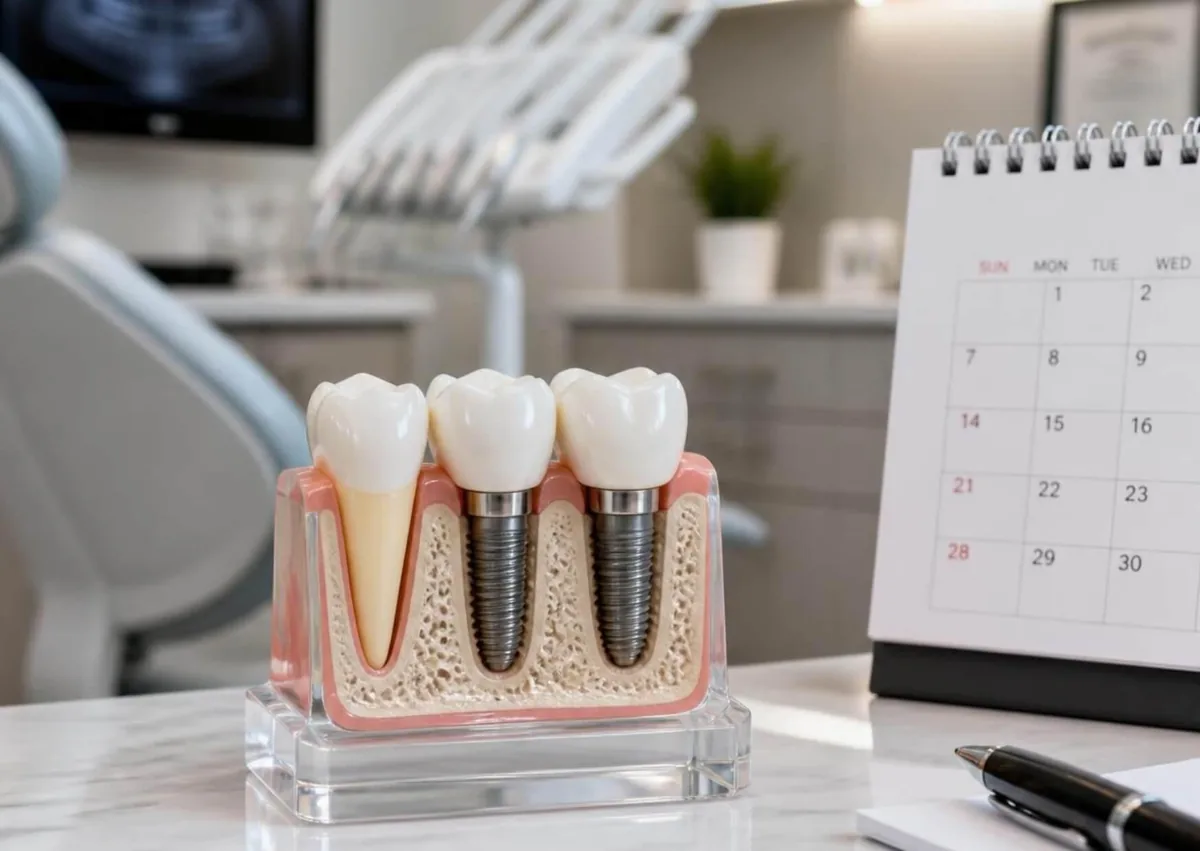
A tooth implant usually takes three to nine months from evaluation to the final crown, though some cases move faster and others take a year or longer. Most of that time is healing time, not time spent in the dental chair.
The timeline depends on whether the tooth has already been removed, whether bone grafting is needed, and how quickly the implant bonds with the jawbone. Your dentist or oral surgeon can give a more exact estimate after an exam and imaging, and can also review related questions such as the cost of dental implants.
If you're weighing options for replacing a missing tooth and want a durable, natural-feeling solution, dental implants can be a predictable long-term choice. Elmtree Family Dental in Columbia, SC helps patients understand timelines, comfort options, and expected outcomes so you can decide with confidence.
Dental implant treatment usually happens over several visits. The implant is a small post, often made of titanium, that is placed in the jawbone to support a replacement tooth.
|
Treatment Stage |
Common Timing |
What to Expect |
|---|---|---|
|
Examination and planning |
One or more visits |
Exam, imaging, health review, and treatment planning |
|
Tooth extractions, if needed |
One visit |
The damaged tooth is removed; healing may take several weeks or months |
|
Bone grafting, if needed |
Often 3 to 6 months of healing |
Bone material is added where the jaw needs more support |
|
Implant placement |
Usually 1 to 2 hours for one implant |
The implant post is placed in the jaw under local anesthesia or other planned sedation such as sedation dentistry |
|
Commonly 3 to 6 months |
Bone grows around and stabilizes the implant |
|
|
Abutment and dental crowns |
Several visits over a few weeks |
The connector and custom replacement tooth are fitted |
Some steps can overlap. For example, a dentist may place a graft at the time of extraction or attach the abutment during implant surgery.
If the tooth is still present, it may need to be removed before the implant is placed. In some cases, the implant can go in right away, but infection, bone loss, or the shape of the socket may make a healing period the safer choice.
An implant needs enough healthy bone for support. If bone has shrunk after tooth loss, gum disease, infection, or injury, a graft may be recommended before or during implant placement.
A larger graft usually adds more healing time than a small graft placed around an implant. In the upper back jaw, a sinus lift may also be needed to create enough bone height.
Osseointegration is the process in which the jawbone bonds closely to the implant surface. This step usually takes several months and is essential for long-term stability.
Healing may take longer with reduced bone quality, uncontrolled diabetes, or nicotine and smoking. Smoking and nicotine exposure are linked with poorer implant healing and a higher risk of complications, so this should be reviewed honestly with your dental team.
A single implant often takes less procedure time than several implants or a full-arch restoration, especially when reviewing full mouth implant cost. Even so, the healing phase can still be similar because each implant needs time to integrate with bone.
In cases of severe bone loss, specialized options such as zygomatic dental implants may be considered.
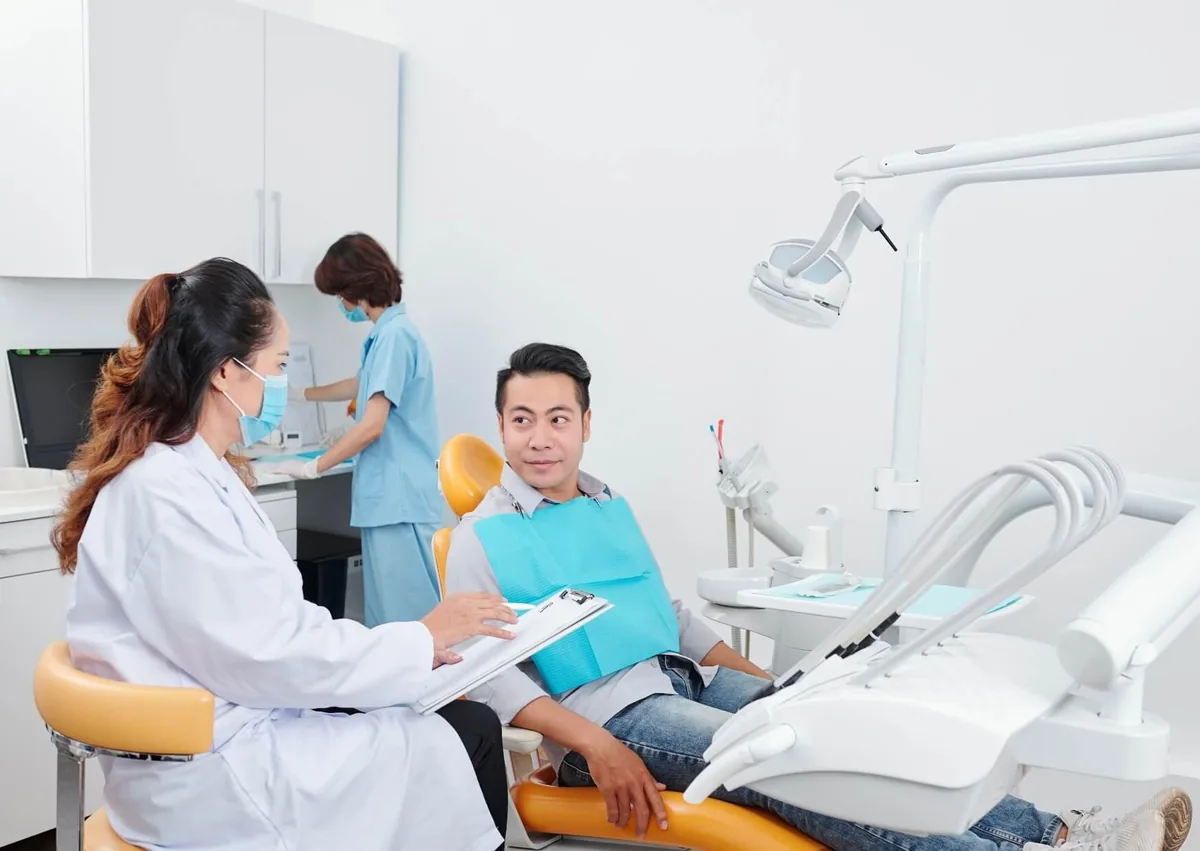
Placing one straightforward implant often takes about one to two hours. The visit may be longer if you need multiple implants, grafting, complex surgical planning, or sedation.
Local anesthesia is commonly used to numb the area. You may feel pressure or vibration, but you should not feel sharp pain during the procedure.
After surgery, mild soreness, swelling, bruising, and a small amount of bleeding are common. These symptoms often improve over several days, while the deeper bone healing continues for months.
Many people return to routine, nonstrenuous activities within a day or two. Follow your clinician's instructions on oral hygiene, food choices, activity, and any recommended medication.
Attend follow-up visits so the dental team can check the gums and implant. Keep the area clean, avoid tobacco and nicotine, and do not chew hard foods on a temporary tooth unless your clinician says it is safe.
For more recovery guidance, see avoiding dairy after dental implant.
In selected cases, a dentist can place an implant and attach a temporary tooth on the same day. This is called immediate loading, but it does not mean healing is complete or that the final crown is ready.
Same-day treatment usually requires strong initial implant stability, enough bone, a favorable bite, and good oral health. The temporary tooth may also need to stay out of heavy chewing while the implant heals.
A delayed approach may be safer if there is active infection, not enough bone, heavy grinding, or another factor that could interfere with healing. Speed should not come before long-term stability.
Once the final crown is attached, the implant should feel stable and function much like a natural tooth. Long-term success depends on healthy bone, good home care, and regular professional monitoring.
Brush daily, clean carefully between the implant and nearby teeth, and keep regular dental visits. If you are still deciding whether this option fits your goals, read dental implants pros and cons to learn more.
Contact the dental office promptly if pain or swelling gets worse instead of better, bleeding does not settle, or the implant or temporary tooth feels loose. A sudden change in your bite, persistent drainage, bad taste, fever, or increasing redness should also be checked.
Seek urgent medical care for trouble breathing or swallowing, rapidly spreading swelling, or swelling that approaches the eye or neck. These symptoms are uncommon but can signal a serious infection or another urgent problem.
If something does not feel right at any stage, do not wait for the next routine visit. Early evaluation may help protect the implant and surrounding tissues.
To explore whether an implant is right for you, arrange an implant evaluation to review your mouth, imaging, and any comfort options. Call Elmtree Family Dental about dental implants in Columbia, SC and nearby Forest Acres, SC at (803) 783-9900 to book an appointment or ask about same-day availability.
You may not need to go without a visible tooth. Depending on the location and treatment plan, a temporary removable tooth, temporary bridge, or temporary crown may be available while the implant heals.
The area is numbed during surgery, so sharp pain should not occur during placement. Temporary soreness and swelling afterward are common, but severe or worsening pain warrants a call to the dentist.
An implant may be placed at the extraction visit, after several weeks of soft-tissue healing, or after several months of bone healing. Infection, available bone, gum health, and implant stability help determine the safest timing.
Dental implants can function for many years, and sometimes decades, with healthy bone, good home care, and regular professional monitoring. The crown may wear out and need replacement sooner than the implant itself.
Large bone grafts, infection, poor plaque control, uncontrolled medical conditions, and tobacco or nicotine use may delay healing or increase complication risks. Following the treatment plan and keeping review appointments can support a more predictable recovery.
| Monday | 8:00 AM – 5:00 PM |
| Tuesday | 8:00 AM – 5:00 PM |
| Wednesday | 8:00 AM – 5:00 PM |
| Thursday | 8:00 AM – 5:00 PM |
| Friday | Closed |
| Saturday | Closed |
| Sunday | Closed |