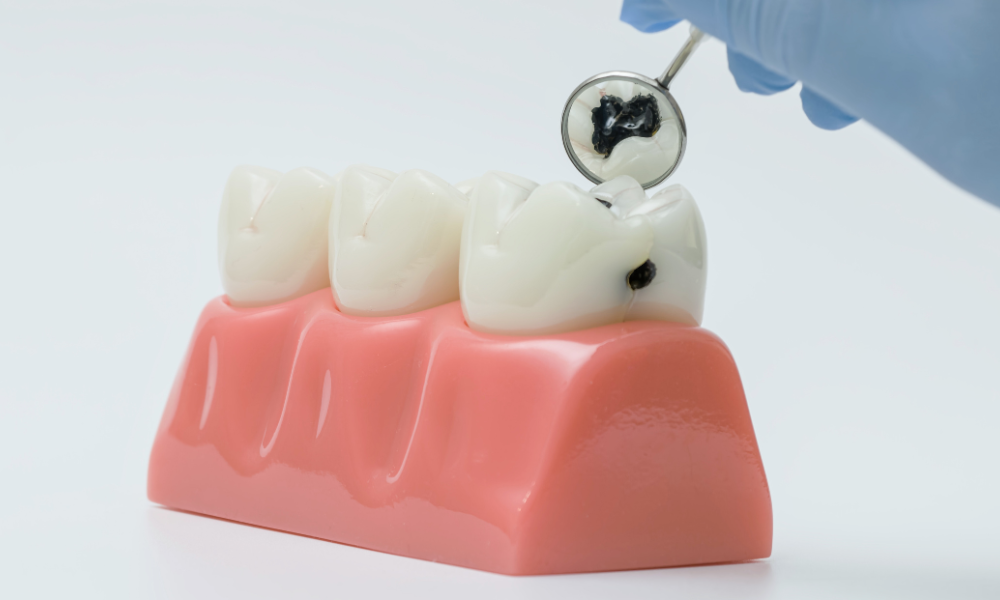
Cavities can begin forming within weeks, but most take months or longer to develop into a visible hole in the tooth. The exact timeline depends on oral hygiene, diet, saliva function, and enamel strength.
At Elmtree Family Dental, early signs of decay are often identified during routine dental exams and cleanings, allowing intervention before significant damage occurs.
Cavities do not form overnight. Instead, they develop in stages, with each phase reflecting deeper involvement of the tooth structure. The speed of progression depends on how frequently teeth are exposed to acid attacks and how effectively the mouth can repair early damage.
This is the earliest stage of decay, where acids begin to remove minerals from enamel.
At this stage, the process may still be reversible with professional fluoride treatment and improved oral hygiene.
If demineralization continues, the enamel begins to lose structural integrity.
Once decay reaches the dentin layer, progression becomes faster.
At this point, dental fillings are typically recommended to stop further progression.
If untreated, decay can reach the tooth pulp, where nerves are located.
Advanced cases may require root canal treatment.
Cavity progression varies based on daily habits and overall oral conditions. Factors such as sugar exposure, oral hygiene, and fluoride use influence how quickly decay develops.
Cavity formation accelerates when acid exposure is frequent and enamel repair is limited.
Yes, early cavities often develop without noticeable symptoms.
Because symptoms may not appear early, routine dental checkups and preventive dental care are essential for detection.
Even though cavities can develop without pain, some subtle signs may indicate early decay:
Recognizing these early changes allows for treatment before the cavity progresses.
Early-stage decay may be managed if the enamel remains intact.
Fluoride Use
Fluoride has been shown to help rebuild weakened enamel and reverse early signs of decay, according to the American Dental Association.
If enamel has already broken down, restorative treatment such as fillings is usually required.
Treatment depends on the stage of decay:
Delaying care may lead to more complex procedures.
Cavities do not heal on their own and will continue to worsen over time if left untreated.
In more severe cases, treatment may require root canal therapy or tooth extraction. Early treatment helps prevent these complications and preserves more of the natural tooth.
Cavities do not develop evenly across all teeth. Certain areas are more vulnerable because they are harder to clean and more likely to trap plaque.
Paying extra attention to these areas during daily brushing and flossing can help reduce the risk of cavity formation.
Early detection helps preserve natural tooth structure and may reduce the need for invasive treatments. Identifying decay early allows for more conservative management options.
Regular dental checkups help detect early signs of decay before a cavity fully develops. While cavities can progress silently, routine exams allow dentists to identify changes in enamel and recommend preventive care.
Staying consistent with dental visits helps reduce the risk of cavities and supports long-term oral health.
A cavity may progress over time depending on oral conditions and habits.
Brushing may help during early demineralization, but not after a cavity forms.
No. Many cavities remain asymptomatic until advanced stages.
Typically every 6 months, depending on risk level.
Cavity formation begins with enamel weakening caused by repeated acid exposure. This process depends on diet, oral hygiene, and preventive care habits.
If you notice tooth sensitivity, discoloration, or visible changes, or if you haven’t had a recent exam, a professional evaluation may help determine your current oral health status.
You can request an appointment to have your teeth evaluated and discuss whether preventive or restorative care is appropriate.

| Monday | 8:00 AM – 5:00 PM |
| Tuesday | 8:00 AM – 5:00 PM |
| Wednesday | 8:00 AM – 5:00 PM |
| Thursday | 8:00 AM – 5:00 PM |
| Friday | Closed |
| Saturday | Closed |
| Sunday | Closed |