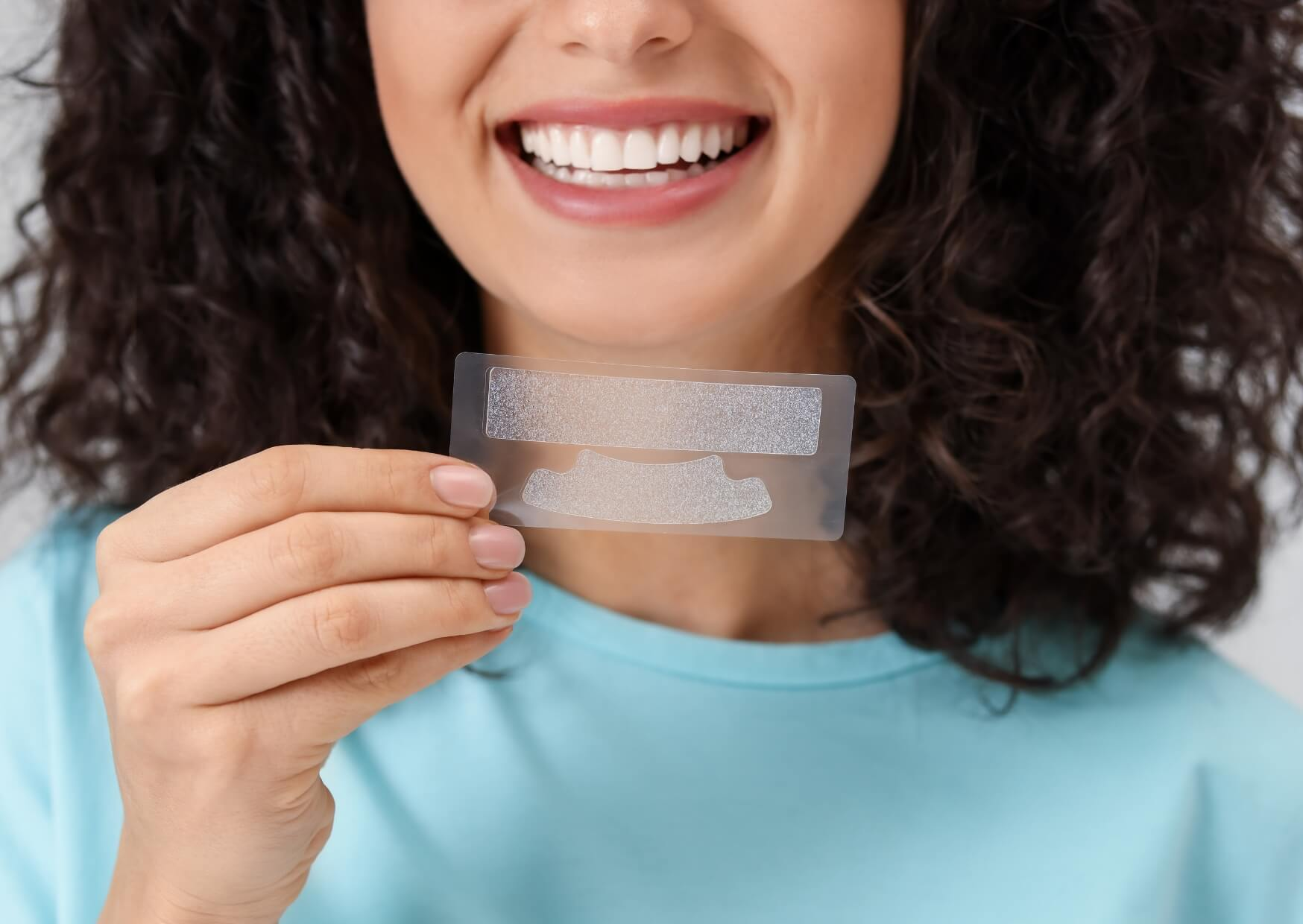
Yes, teeth whitening strips can work for many people, especially when stains are mild to moderate and affect the outer part of the tooth. They usually work best on yellow surface stains from coffee, tea, red wine, or smoking.
They do not work equally well for every type of discoloration. Gray staining, deep internal discoloration, crowns, veneers, bonding, and composite fillings may stand out after treatment.
In simple terms, whitening strips can brighten natural teeth, but they have limits. They are a reasonable over-the-counter option for patients who want gradual improvement and do not have significant sensitivity or untreated dental problems.
At Elmtree Family Dental in Columbia, SC, we offer teeth whitening services that can provide more predictable results than over-the-counter strips.
Most whitening strips use a peroxide-based gel. Peroxide breaks down stain molecules within the enamel, the hard outer layer of the tooth, and can also affect the dentin underneath.
That is why strips do more than scrub away surface debris. They can lighten some stain within the tooth structure, but the change is usually more modest than professional whitening.
Results depend on contact time, peroxide strength, and how well the strip fits against the teeth. If the strip does not sit evenly, whitening can look patchy, especially near the gumline or on crooked or rotated teeth.
Whitening strips tend to work best for recent or moderate staining on natural enamel. Patients often see the most improvement when discoloration comes from coffee, tea, cola, tobacco, or strongly pigmented foods.
Age also matters. Teeth often darken over time as enamel thins and the naturally yellower dentin shows through more clearly.
Strips may still help, but the result may not be dramatic. If the color change is related to a root canal, dental trauma, enamel defects, tetracycline staining, or older restorations, strips are much less predictable.
In those cases, a dental exam is usually more helpful than trying repeated over-the-counter products.
Some stains are simply too deep or uneven for strips to handle well. Dental restorations do not whiten the same way natural teeth do, so dental crowns, veneers, bonding, and composite fillings may stand out after treatment.
Strips may also work poorly if there is tartar buildup, plaque, dehydration-related color change, or active tooth decay. These issues can make teeth look darker or uneven and can interfere with a clean, consistent result.
Another common problem is unrealistic expectations. Whitening strips can brighten teeth by a few shades, but they do not usually create the same level of change as in-office whitening.
Most patients who respond to whitening strips see gradual change, not an overnight result. Improvement often becomes noticeable over several days to a couple of weeks, depending on the product and the starting shade.
The final result is usually subtle to moderate. Teeth may look fresher and less yellow, but not uniformly bright white, especially if the natural tooth color is darker to begin with.
How long the effect lasts depends on diet, smoking, oral hygiene, and the original cause of staining. Coffee, tea, red wine, and tobacco can shorten the results, while regular cleanings and stain-control habits can help them last longer.
The most common side effects are tooth sensitivity and gum irritation. Sensitivity may feel like short, sharp discomfort with cold air, cold drinks, or sweet foods.
Gum irritation often happens when peroxide touches the soft tissue. These effects are usually temporary, but they can be more noticeable if there are exposed tooth roots, enamel wear, gum recession, cavities, or cracked teeth.
Whitening over untreated dental disease can make symptoms worse. Stop using the strips and contact a dentist if pain is significant, if the gums become white or sore for more than a short time, or if one tooth becomes much more sensitive than the others.
A single painful tooth may point to a cavity, crack, or pulp problem rather than routine whitening sensitivity.
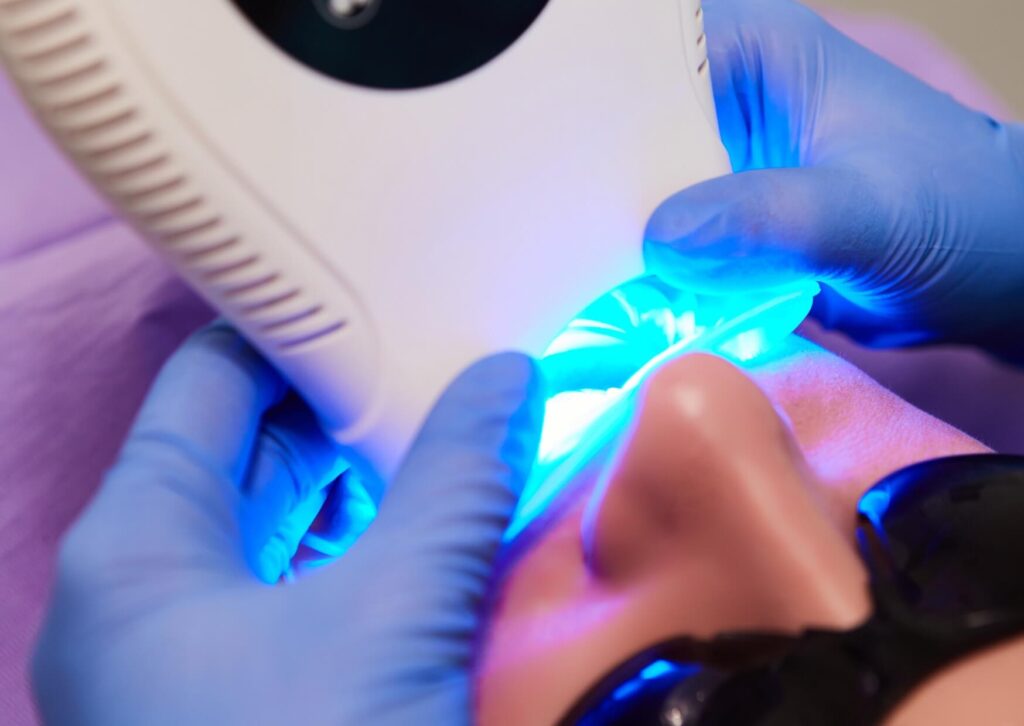
Professional whitening usually works faster and more predictably because the materials are stronger and the treatment is tailored to your teeth. A dentist can also identify reasons whitening may fail or cause pain before treatment starts.
For patients with sensitive teeth, mixed restorations, deep discoloration, or a history of whitening that did not work, teeth whitening under dental supervision is often the better option.
Whitening strips are less expensive and easier to access, which makes them appealing for mild staining. The tradeoff is that the fit is generic, the whitening is often less even, and the result may be less dramatic.
In general, strips make the most sense when the goal is a modest improvement, not a major cosmetic change.
A dental check is a good idea before whitening if there is tooth pain, visible decay, broken fillings, gum bleeding, recent trauma, or strong sensitivity to cold or sweets. Whitening should not be the first step when the mouth is already showing signs of disease.
A professional exam and cleaning can find and treat the problems that make whitening unsafe or ineffective, so consider dental exams & cleanings first.
It is also worth getting evaluated if one tooth is darker than the others. That pattern may suggest prior injury, nerve damage, or internal discoloration.
Whitening strips may not fix that kind of problem and can delay the right diagnosis. Seek prompt dental care if swelling, fever, pus, a bad taste that does not clear, facial pain, or severe throbbing develops.
Those are urgent red flags and may indicate infection rather than a cosmetic issue.
Whitening lasts longer when stain exposure is reduced. Frequent coffee, tea, tobacco, and deeply colored drinks can quickly dull the result, especially in the first few days after whitening.
Daily brushing with fluoride toothpaste, cleaning between the teeth, and keeping up with routine dental visits all help limit new stain buildup. Professional cleanings can also remove external stains that whitening strips cannot fully address once plaque and tartar accumulate.
If the color change is disappointing, uneven, or short-lived, the next step should be a dental conversation rather than repeated unsupervised whitening. That approach is safer and usually more efficient than cycling through stronger over-the-counter products.
If you want a more predictable whitening result, Elmtree Family Dental in Columbia, SC, serving patients from West Columbia and Lexington, offers professional teeth whitening. Call (803) 783-9900 to schedule.
Often, yes. Yellow staining on natural teeth is usually the type that responds best, although the amount of change varies from person to person.
They may not work well on crowns, veneers, fillings, gray discoloration, trauma-related darkening, or deep internal stains. Uneven enamel and poor strip fit can also limit results.
When used as directed, they are generally safe for many patients. They can still cause temporary sensitivity or gum irritation, and they are not a good choice for untreated cavities.
Results often last for months, but the timeline varies. Diet, smoking, oral hygiene, and the original cause of discoloration all affect how quickly stains return.
Not without a dental evaluation first. A single dark tooth may signal a problem that whitening strips will not correct and should be assessed before cosmetic treatment.

| Monday | 8:00 AM – 5:00 PM |
| Tuesday | 8:00 AM – 5:00 PM |
| Wednesday | 8:00 AM – 5:00 PM |
| Thursday | 8:00 AM – 5:00 PM |
| Friday | Closed |
| Saturday | Closed |
| Sunday | Closed |