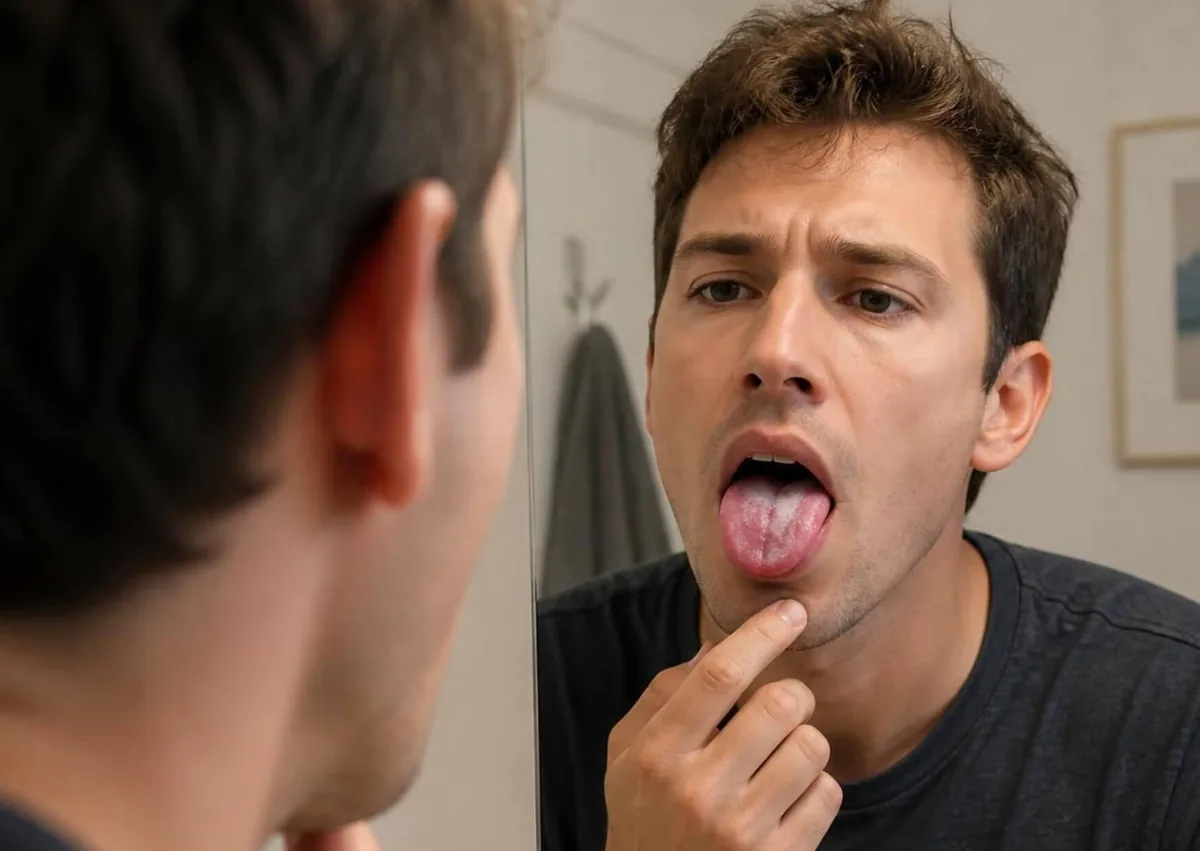
Oral thrush is a yeast infection in the mouth that often causes creamy white patches, redness, soreness, or burning. It is usually treatable with antifungal medicine, but other mouth conditions can look similar, so symptoms that persist, return, or are unclear should be checked by a dentist or medical clinician or by arranging a dental exam.
If you’re dealing with persistent white patches, pain, or uncertainty about a possible oral thrush, a dental exam can help identify the cause and guide appropriate treatment. Elmtree Family Dental in Columbia, SC can assess your symptoms, review risk factors, and recommend targeted care to relieve discomfort and reduce recurrence.
Oral thrush, also called oral candidiasis, happens when Candida yeast grows more than usual in the mouth. Candida normally lives in small amounts in the mouth without causing problems.
Common signs include white or cream-colored patches on the tongue, inner cheeks, gums, roof of the mouth, or throat. These patches may wipe away and leave a red, tender surface that can bleed slightly.
Some people have redness or burning without obvious white patches. Other symptoms can include a cottony feeling, altered taste, cracks at the corners of the mouth, discomfort with eating, or soreness under dentures.
Oral thrush is more likely when illness, medication, or changes in the mouth disrupt the normal balance of microorganisms. Antibiotics can reduce bacteria that usually help keep Candida under control, and inhaled or oral corticosteroids can increase the chance of fungal overgrowth.
Additional risk factors include:
Oral thrush is not usually considered contagious in healthy adults. Still, Candida can pass through close contact, and people with weaker immune defenses may be more likely to develop infection.
Not every white patch or sore area is an oral thrush. A clinician can often identify the cause during an oral exam, but a swab, scraping, blood test, or medical evaluation may be needed if the appearance is unusual or the problem keeps coming back.
For information about gum inflammation, see gingivitis symptoms.
|
Finding |
Typical Pattern |
Recommended Next Step |
|---|---|---|
|
Oral thrush |
Creamy patches may wipe away, exposing redness |
Arrange a dental exam if symptoms persist or risk factors are present |
|
Coated tongue |
Broad coating related to debris, dry mouth, or hygiene |
Clean gently and seek care if it does not improve |
|
Canker sore |
Round, painful ulcer rather than a wipeable patch |
Monitor briefly; get care for severe or recurring sores |
|
Leukoplakia or another persistent white lesion |
White area usually does not wipe away |
Schedule prompt dental evaluation |
Do not scrape a patch forcefully or apply bleach, peroxide, essential oils, or other harsh substances. These can injure oral tissue and make diagnosis harder.
Treatment usually involves a prescription antifungal medicine. The choice depends on the person's age, health, symptom severity, and medication history.
Medicine may be applied inside the mouth or taken by mouth. It is important to complete the full prescribed course, even if symptoms improve sooner.
A clinician may also address factors that make thrush return. That may include improving denture care, managing dry mouth, reviewing inhaler technique, or recommending medical testing when recurrent thrush could be linked to diabetes, nutritional deficiency, or reduced immune function.
Symptoms often start improving within a few days after proper treatment, but recovery time varies. Worsening symptoms or no clear improvement should lead to follow-up rather than repeated self-treatment.
Brush twice a day with fluoride toothpaste, clean between the teeth, and clean the tongue gently. Avoid aggressive scraping.
Keep removable dentures clean, remove them at night unless a dental professional advises otherwise, and have the fit checked if they rub or trap debris. After using an inhaled corticosteroid, rinse your mouth with water and spit it out.
A prescribing clinician or pharmacist can review inhaler technique and discuss whether a spacer is appropriate. Talk with your dental team about preventive dentistry to reduce recurrence by improving denture care, addressing dry mouth, and supporting daily oral hygiene.
Avoid smoking and vaping, and work with a medical clinician to manage diabetes or ongoing dry mouth. Do not stop antibiotics, steroids, or other prescribed medicines without speaking with the prescriber.
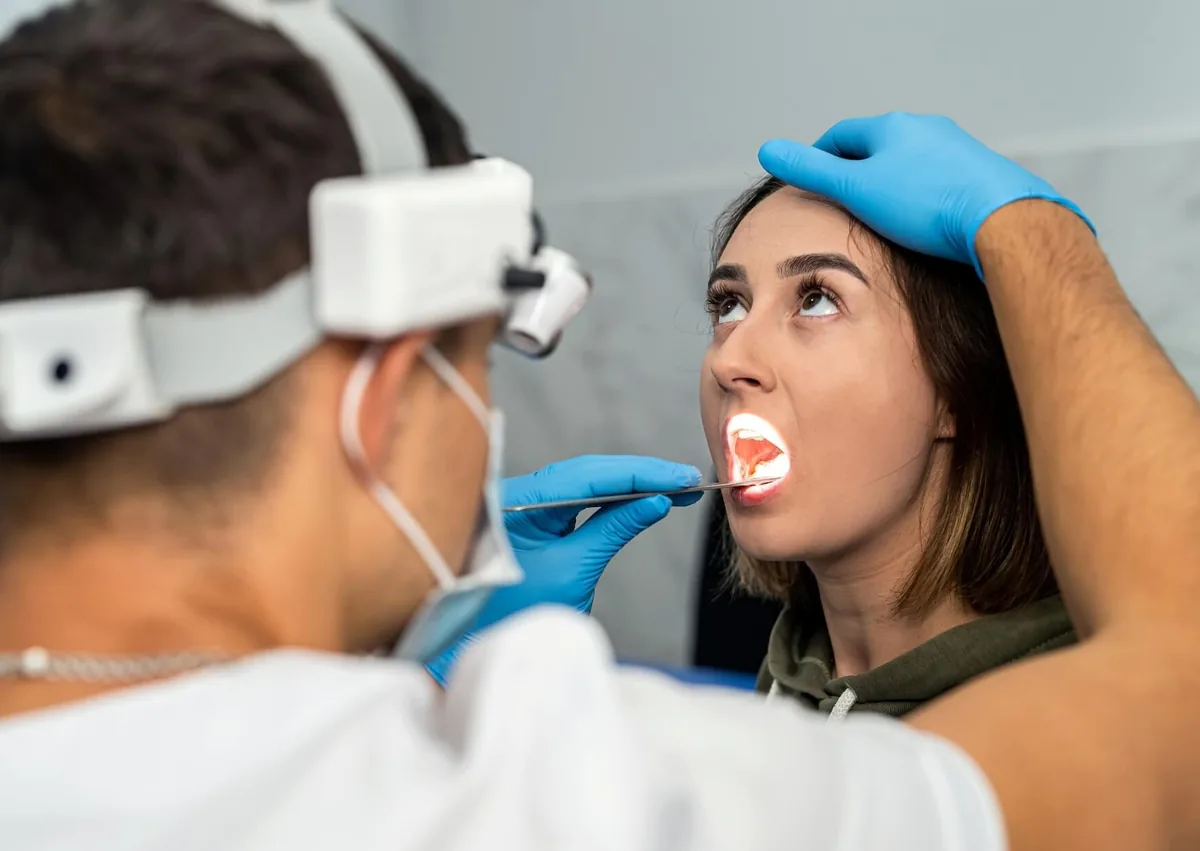
Arrange an exam if white patches, burning, soreness, or taste changes last more than several days, come back, or make eating uncomfortable. Prompt evaluation is especially important for infants, older adults, denture wearers, and anyone who has diabetes, is receiving cancer treatment, takes immune-suppressing medicine, or has a weakened immune system.
Parents concerned about young children can learn when to take a child to the dentist.
Seek urgent medical care for trouble breathing or inability to swallow liquids. Rapidly increasing swelling, signs of dehydration, severe weakness, fever with worsening mouth symptoms, or pain when swallowing also need prompt medical assessment because infection or another condition may extend beyond the mouth.
A dentist or medical clinician can tell thrush apart from other oral conditions, prescribe the right treatment, and investigate repeated infections. Timely evaluation also helps identify persistent white or red areas that may need separate testing.
If symptoms persist, recur, or cause concern, the next step is a dental exam to confirm diagnosis and start effective treatment. Elmtree Family Dental offers dental exams and cleanings in Columbia, SC and nearby Forest Acres, SC; call (803) 783-9900 or book an appointment to get prompt care.
A mild case may sometimes improve if the trigger goes away. An exam is still a good idea if symptoms persist, return, or affect someone with higher health risks.
It can be painless, but many people notice burning, tenderness, altered taste, or discomfort when eating. Cracks at the corners of the mouth and soreness under dentures can also occur.
Yes. In some cases, Candida can involve the throat or esophagus, which is the tube that carries food to the stomach.
Pain with swallowing, trouble swallowing, a feeling that food is sticking, or chest discomfort should be evaluated promptly.
A dental professional may recommend limiting wear and removing dentures overnight so the tissues can recover. Dentures usually need careful cleaning and may need professional adjustment or specific disinfection guidance to reduce reinfection.

| Monday | 8:00 AM – 5:00 PM |
| Tuesday | 8:00 AM – 5:00 PM |
| Wednesday | 8:00 AM – 5:00 PM |
| Thursday | 8:00 AM – 5:00 PM |
| Friday | Closed |
| Saturday | Closed |
| Sunday | Closed |