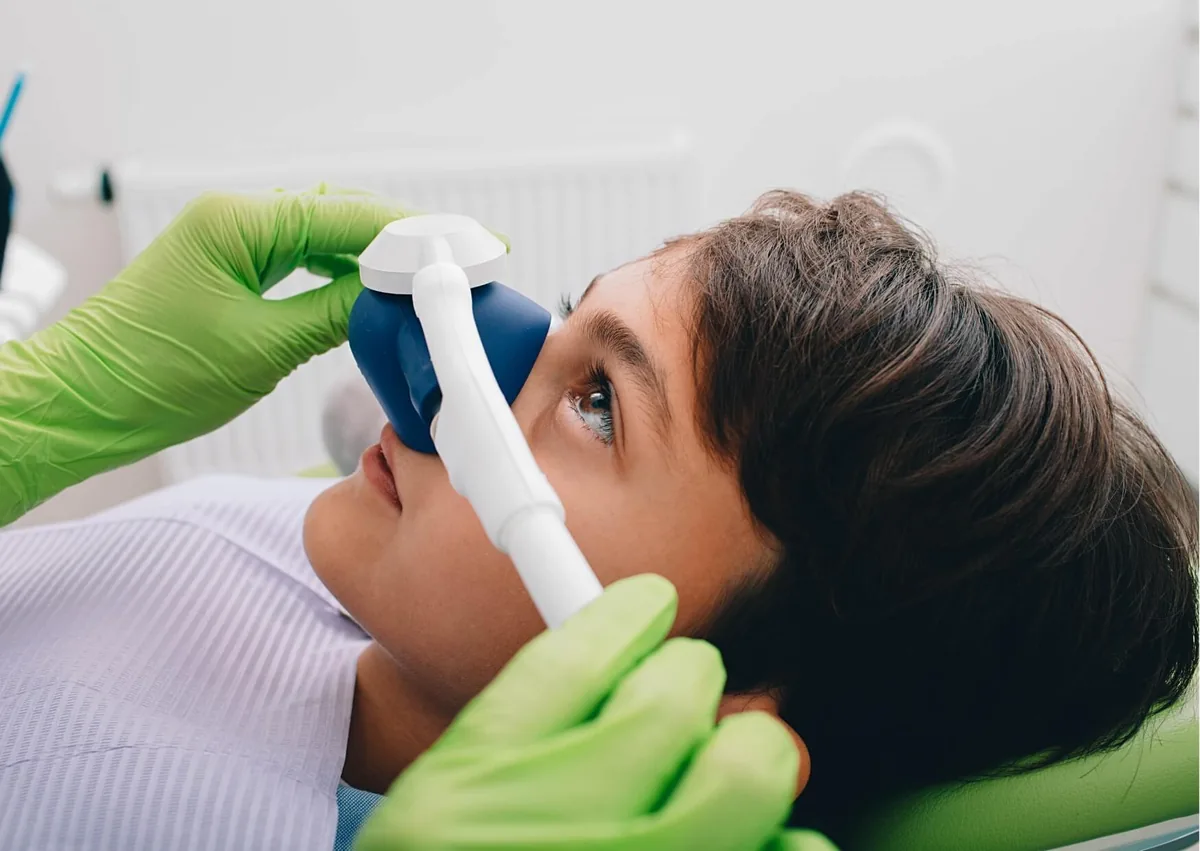
Sedation dentistry usually costs about $50 to several thousand dollars, depending on the type of sedation, how long the visit lasts, where the office is located, and what level of monitoring is needed.
In most cases, nitrous oxide costs the least, oral sedation costs more, and IV sedation or general anesthesia costs the most; the dental procedure itself is usually billed separately.
These are broad estimates, not guaranteed fees. A dentist needs to review your health history, anxiety level, treatment plan, and expected appointment time before recommending a safe option and giving you an itemized quote.
If anxiety, a strong gag reflex, or a long procedure is making dental care feel harder to manage, sedation dentistry may help you get treatment more comfortably. At Elmtree Family Dental in Columbia, SC, patients can get clear guidance on sedation choices, safety monitoring, and what recovery is likely to involve.
| Sedation Method | Common Estimated Cost | What to Expect |
|---|---|---|
| nitrous oxide | $50 to $200 or more | Inhaled through a small nose mask; effects usually wear off quickly after the gas is stopped |
| Oral sedation | $150 to $500 or more | Prescription medicine taken before treatment; effects may last for several hours |
| IV sedation | $500 to $1,000 or more per hour | Medicine delivered through a vein, with continuous monitoring |
| General anesthesia | $1,000 to several thousand dollars | A controlled state of unconsciousness that requires advanced monitoring and trained personnel |
Prices vary widely across the United States. Some offices charge a flat fee, while others bill in 15-minute increments, by the hour, or based on treatment complexity.
Sedation is different from pain control. Local anesthetic numbs the area being treated, while sedation helps reduce anxiety, awareness, or memory, and many procedures involve both charges.
The sedation method and appointment length usually have the biggest effect on price. Longer or more complex visits may require more medication, more staff time, added recovery time, and closer monitoring.
Your medical history can also affect what is safe and appropriate. Conditions such as sleep apnea, pregnancy, heart or lung disease, certain medications, or a past reaction to anesthesia may change the plan or require a setting with more support.
Other factors that may affect cost include:
A low advertised price may not reflect the full cost. Ask whether the quote includes monitoring, anesthesia services, facility fees, recovery time, and any cancellation policy.
Many dental plans treat sedation as an optional comfort service, so coverage may be limited or excluded for routine care. Coverage is more likely when sedation is considered medically necessary, but rules vary by plan.
Ask the dental office for the procedure codes and a written estimate, then check directly with your insurer. A pre-treatment estimate is not a guarantee of payment, but it can help you understand your likely out-of-pocket cost.
In some medically necessary cases, health insurance may help cover hospital-based anesthesia even if the dental treatment itself is not covered. Flexible spending accounts and health savings accounts may also be used for eligible expenses, depending on your plan and tax rules.
The least expensive option is not always the safest or best fit. A dentist should consider the procedure, your anxiety level, ability to cooperate, medical history, age, medications, past sedation experiences, and the depth of sedation needed.
Nitrous oxide often works well for mild to moderate anxiety and shorter visits. Oral sedation or IV sedation may be considered for stronger anxiety, a strong gag reflex, difficulty sitting still, extensive treatment, or a past traumatic dental experience.
General anesthesia is usually reserved for selected situations that need a deeper level of control. The goal is to choose the safest option that matches your treatment and health needs.
Before you agree to treatment, ask:

Follow the dental team's instructions about eating, drinking, and medications exactly. Do not stop prescription medicines or take extra calming substances unless your treating clinician specifically tells you to do so.
Give the office a full list of medications, supplements, allergies, medical conditions, pregnancy status, and any past reaction to anesthesia. Alcohol, cannabis, sleep aids, opioids, and other sedating substances can interact with dental sedation, so it is important to disclose them honestly.
Deeper sedation usually means you will need a responsible adult to drive you home and stay available during recovery. Plan transportation ahead of time, and do not drive or operate machinery until the dental team says it is safe.
Contact the dental office if instructions are unclear or if anxiety is causing you to delay care for pain, swelling, bleeding, or a damaged tooth. Early treatment can keep a smaller problem from becoming more complicated and expensive.
After sedation, call the treating team for persistent vomiting, worsening confusion, unusual weakness, severe pain, fever, or symptoms that are not improving as expected. Call 911 for trouble breathing, blue or gray lips, inability to wake, chest pain, seizure, or severe allergic symptoms such as facial swelling with breathing difficulty.
A consultation is the best way to compare safe options and get a complete estimate for both sedation and dental treatment. Bring your insurance information and medication list so the office can review risks and expected costs.
For a personalized estimate and to discuss safe sedation options for your procedure, contact Elmtree Family Dental's sedation dentistry team in Columbia, SC, serving nearby West Columbia and Cayce. Call (803) 783-9900 to schedule or ask about same-day availability.
Often, no. Ask for an itemized estimate that shows the dental procedure, local anesthetic, sedation, monitoring, facility charges, and any separate anesthesia fee.
Usually, yes. Nitrous oxide is often the least expensive option because it is simpler to administer and wears off quickly, while oral and IV methods may require more preparation, monitoring, and recovery planning.
Some dental offices offer payment plans or work with third-party financing companies. Review the total repayment amount, fees, and refund terms before you agree.
Sometimes. Combining multiple procedures into one visit may reduce repeated sedation and appointment costs, but whether that is safe depends on the total treatment time, your medical history, and the clinician's judgment; for example, fillings and tooth extractions may sometimes be completed together.
Not always. Nitrous oxide, oral sedation, and many forms of IV sedation often leave patients conscious but relaxed, while general anesthesia causes unconsciousness.

| Monday | 8:00 AM – 5:00 PM |
| Tuesday | 8:00 AM – 5:00 PM |
| Wednesday | 8:00 AM – 5:00 PM |
| Thursday | 8:00 AM – 5:00 PM |
| Friday | Closed |
| Saturday | Closed |
| Sunday | Closed |